
Is it legal to record an HOA meeting? This is a question that both homeowners and board members often ask. In Illinois, there are certain laws that must be taken into consideration. Moreover, associations must refer to their governing documents.
Is It Legal to Record an HOA Meeting?
To know if it is legal to record an HOA meeting, it is important to check state laws, the HOA’s governing documents, and the type of meeting involved.
State Laws
Associations must consider consent rules in the state. In one-party consent states, a person may legally record a conversation or meeting as long as they are also a participant. On the other hand, in two-party consent states, all participants must agree to being recorded (or certain restrictions may apply).
Keep in mind that the First Amendment generally does not apply to HOAs and condo associations. These communities are considered private organizations, and the First Amendment only protects the right to record public officials in public spaces.
That said, even in two-party consent states, specific laws may allow participants to record an HOA meeting.
Governing Documents
In addition to state laws, board members must also refer to their CC&Rs and bylaws. These governing documents may consist of explicit provisions that either allow or disallow recordings. Some permit attendees to record meetings with certain requirements, such as advance notice, or limitations, such as allowing only audio recordings.
Type of Meeting
In general, there are two types of meetings in an HOA community: open and closed. Open meetings are those that members are invited to attend. These can apply to annual meetings, board meetings, and special meetings.
In comparison, closed meetings are those that only certain people are allowed to join. These usually apply to portions of board meetings, also known as executive sessions.
Board members are typically the only participants in a closed meeting, but they may invite the association’s manager or lawyer. At this meeting, the board discusses confidential matters such as personnel issues, delinquencies, and lawsuits.
If state laws and the governing documents permit, recording is normally limited to open meetings. Closed-door meetings, which are strictly private, can’t be recorded.
Can You Record HOA Meetings in Illinois?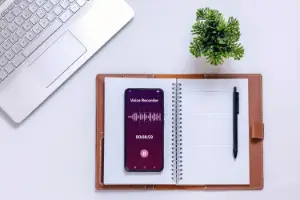
Recording HOA meetings in Illinois may be permitted depending on the type of association and the governing documents.
The Illinois Common Interest Community Association Act, which applies to HOAs, does not expressly allow or prohibit recording. Board members must turn to their CC&Rs and bylaws for confirmation.
The Illinois Condominium Property Act, on the other hand, is more specific. According to 765 ILCS 605/18, any unit owner may record open board meetings using tape, film, or other methods. This applies to board members, too. That said, the condo board may enforce reasonable rules on recording such meetings.
Again, the type of meeting plays an important role in determining whether you can record. Generally, board members may record open meetings but not executive sessions.
Can Homeowners Record HOA Meetings in Illinois?
The Illinois Common Interest Community Association Act is silent, but the Condominium Property Act explicitly allows unit owners to record open meetings.
In HOAs, homeowners must refer to their governing documents to confirm whether recording is allowed, since state laws don’t address the issue. The CC&Rs and bylaws should also include any additional rules governing recordings.
It’s different for condominiums. Condo associations can’t prohibit owners from recording open meetings, but they can impose reasonable restrictions. The law is specific in that it does not allow members to record closed meetings.
Is It Legal to Record an HOA Meeting? Reasonable Rules to Enforce
Most associations adopt reasonable rules governing the act and use of recordings, such as:
- Requiring advance notice (24 to 48 hours) in writing
- Specifying where recording devices may be set up
- Prohibiting the blocking of pathways, entryways, and other attendees
- Requiring equipment to remain in one place
- Banning loud equipment, additional lighting, or flashes
- Forbidding recorders from interrupting the meeting
- Prohibiting recorders from distributing the recording or posting it online
These are the most common restrictions that communities enforce. Of course, the types of rules an association enacts should depend on their unique needs and circumstances. Rules are not universally compatible.
Should an HOA Allow Recording of Meetings?
In communities where the Condominium Property Act does not apply, the board decides whether to allow meeting recordings. When considering this decision, it is important to weigh the pros and cons.
Video or audio recordings promote transparency, accountability, and accuracy. If there’s ever a dispute over an action or decision, directors can simply watch a playback to settle the conflict. These recordings can also serve as evidence for the HOA in the event of litigation.
Additionally, recordings make it easier to draft minutes. The HOA secretary can go back to the recording whenever they need clarification on a vote or motion. Beyond that, owners who were unable to attend the meeting can use these recordings to catch up on community business.
On the other hand, recordings also have drawbacks. Board members and residents may hesitate to speak freely or voice their opinions out of fear of being recorded. There’s also a risk of breaching confidentiality if private recordings are leaked.
Moreover, some bad eggs may intentionally cut clips to make the board or another resident look bad when viewed out of context. They may even post these clips on social media to garner attention.
Since recording meetings has its ups and downs, boards should consider the decision carefully. Some associations only allow the HOA to record meetings to maintain control and ensure privacy. When in doubt, consulting a lawyer always helps.
Is It Legal to Record an HOA Meeting? Answered!
Recording an HOA meeting may seem like an easy way to document it, but it is not always allowed. In Illinois, condo associations generally can’t prohibit owners from recording meetings, even through video. Meanwhile, HOAs must refer to their governing documents for guidance.
Managing an HOA in Chicago doesn’t have to be difficult. Let Hillcrest take care of the daily work with our professional HOA management services. Get started by calling 630-627-3303 or requesting a proposal online!
RELATED ARTICLES:
- Are Virtual HOA Meetings Still Necessary?
- HOA Meeting: What Goes On From Start To Finish
- HOA Meeting Protocol: A Proper Structure For Meetings