
What is the role of the grievance committee? In an HOA, a grievance committee primarily deals with dispute resolution. Homeowners and board members often have different viewpoints and backgrounds, which can lead to conflict. Having a separate committee helps promote fairness and reduce the board’s workload.
What is the Role of the Grievance Committee?
An HOA grievance committee is a dedicated group of volunteers responsible for reviewing, investigating, and resolving disputes. These disputes often stem from rule violations, but they can also originate from a clash of opinions or simple complaints.
There are two types of disputes: board-to-homeowner disputes and neighbor-to-neighbor disputes. The grievance committee can step in to handle both.
What is the role of the grievance committee?
1. Neutral Buffer
The grievance committee serves as an impartial middleman between two disputing parties. This committee helps keep conflicts professional, preventing them from turning into personal attacks or bitter arguments. Another goal is to resolve disputes before they become legal battles.
2. Investigation and Mediation
The grievance committee reviews written complaints from homeowners. From there, committee members gather evidence, speak with involved parties, and hold mediation sessions.
3. Recommendations vs Decisions
The authority of an HOA grievance committee depends on the association’s governing documents. In some communities, this committee has decision-making power, with its decision being final and binding.
In others, the committee serves only in an advisory capacity. This means members provide recommendations to the board, and directors ultimately have the final say by vote.
Who are the Members of the Grievance Committee?
The HOA grievance committee is typically made up of volunteer homeowners, but exact membership qualifications depend on the association’s governing documents. More often than not, board members are not permitted to join.
Many communities establish strict requirements for HOA grievance committees. They may require owners to be in good standing, with no unpaid balances or unresolved rule violations.
While volunteers with a legal background are a plus, it is not usually required. At the end of the day, the CC&Rs and bylaws (or the committee charter) dictate membership qualifications.
That said, independence from the HOA board is essential. To ensure fairness, prevent bias, and avoid conflicts of interest, directors and officers are typically barred from becoming members of this committee.
Impartiality is a key trait for committee members. A director may be unable to exercise objective judgment when deciding the outcome of a dispute between the board and a homeowner.
What is the HOA Complaint Process?
Every HOA must have a written complaint procedure, but the exact steps can include receiving, reviewing, and resolving the complaint with proper documentation.
1. Establish Mandatory Written Policy
In Illinois, HOAs and condo associations are legally required to establish a written policy for resolving complaints. Under Section 35 of the Illinois Condominium and Common Interest Community Ombudsperson Act, associations may have a complaint procedure and a standardized complaint form to document disputes.
2. File and Receive the Complaint
The complaint process begins with a submission. An owner may file a complaint against the board or another owner by completing a form and filing it with the HOA grievance committee. This complaint must include all pertinent details, including the provisions in the governing documents or state laws that are being breached.
It is best practice for the committee to respond with an acknowledgment. This simply tells the owner that the grievance committee received the complaint and is set to start investigating it.
3. Review the Complaint
The grievance committee must review each complaint individually. This involves checking state laws and the association’s governing documents to confirm wrongdoing and know how to proceed.
Keep in mind that reviews must be objective and reasonable. There is no room for bias, favoritism, or retaliation. It is important to apply the rules equally and consistently among all residents.
4. Decide the Outcome
After thoroughly investigating the complaint, the committee must then make a decision. The committee must put this final determination in writing and send it to the complainant within 180 days. A strict timeline and deadline ensure that the committee does not ignore any complaints.
5. Document Everything
Finally, the HOA grievance committee must document every step of the process. Keep records of the original complaint form, correspondence, investigations, and decision. These may come in handy if the situation escalates.
Options for Escalation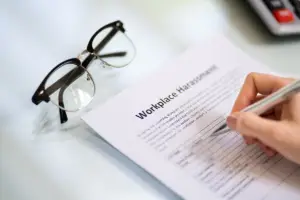
When the HOA grievance procedure doesn’t work, there are other options members can take, such as escalating to the Condominium and Common Interest Community Ombudsperson, filing an IDFPR complaint, or taking legal action.
1. Condominium and Common Interest Community Ombudsperson
In Illinois, owners may submit an inquiry through the state’s Ombudsperson program. While the Ombudsperson’s role is simply to educate, owners may request formal dispute assistance.
That said, they must be current on dues and complete the association’s written complaint process first. Once they obtain a final adverse decision marked “final,” they can submit the request within 30 days.
2. IDFPR Complaint
If the HOA board has any statutory or governance violations, owners may file a complaint directly with the Illinois Department of Financial and Professional Regulation (IDFPR). They may access the online form and submit their complaint via mail or email.
3. Small Claims Court
Depending on the situation, owners may take legal action against the HOA. Filing a case in small claims court can help an owner recover a specific financial amount, with a $10,000 limit in Illinois.
That said, court proceedings can be quite expensive and lengthy. This should only come as a last resort.
What is the Role of the Grievance Committee? Explained!
The HOA grievance committee keeps the board in check and helps resolve disputes within the community. With such an important role to play, it is imperative to avoid conflicts of interest or even the appearance of such. The committee must remain independent, which means no board member may serve.
Managing an HOA in Chicago doesn’t have to be difficult. Let Hillcrest take care of the daily work with our professional HOA management services. Get started by calling 630-627-3303 or requesting a proposal online!
RELATED ARTICLES:
- Addressing HOA Complaints And Common HOA Violations
- HOA Dispute Resolution: Resolving Conflicts In An HOA
- The Problem Of HOA Not Enforcing Rules And Selective Enforcement